


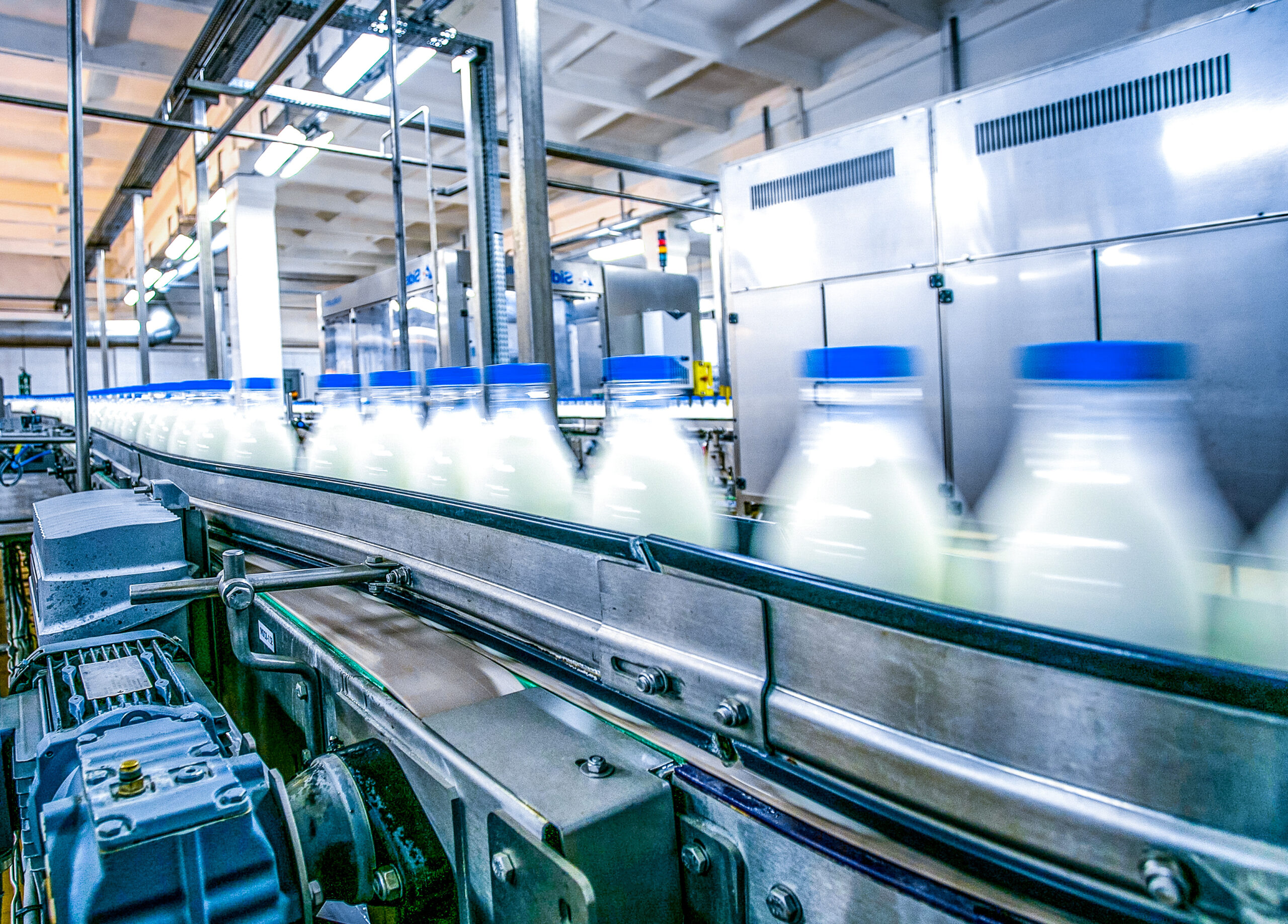
Open-heart retrofit for one of europe’s largest dairies: From S5 to Plant iT V9.
50
Initial situation
Legacy software that has evolved over time is reaching its limits
- Faulty and unreliable Siemens S5 controller with Interbus connection
- Many legacy issues and ad hoc solutions resulting from nearly three decades of operation
- Confusing program structures and incomplete documentation
- A growing shortage of personnel with S5 expertise
The challenge
Clear objectives for the project
Modernization without significant production downtime
Replacement of the S5 and ProLeiT OSNT Software
Integration into the existing software and MES landscape
Restructured, clearly separated process areas
State-of-the-art safety technology that meets dairy industry standards
Improved maintainability and scalability
Solution
From 1.0 to Industry 4.0 in just 16 months
Advantages
The retrofit offers both operational and strategic benefits for operators and users.
Structured software
Future-proof technology
Improved maintainability
Greater integration
State-of-the-art safety technology and comprehensive documentation
Implementation with minimal downtime
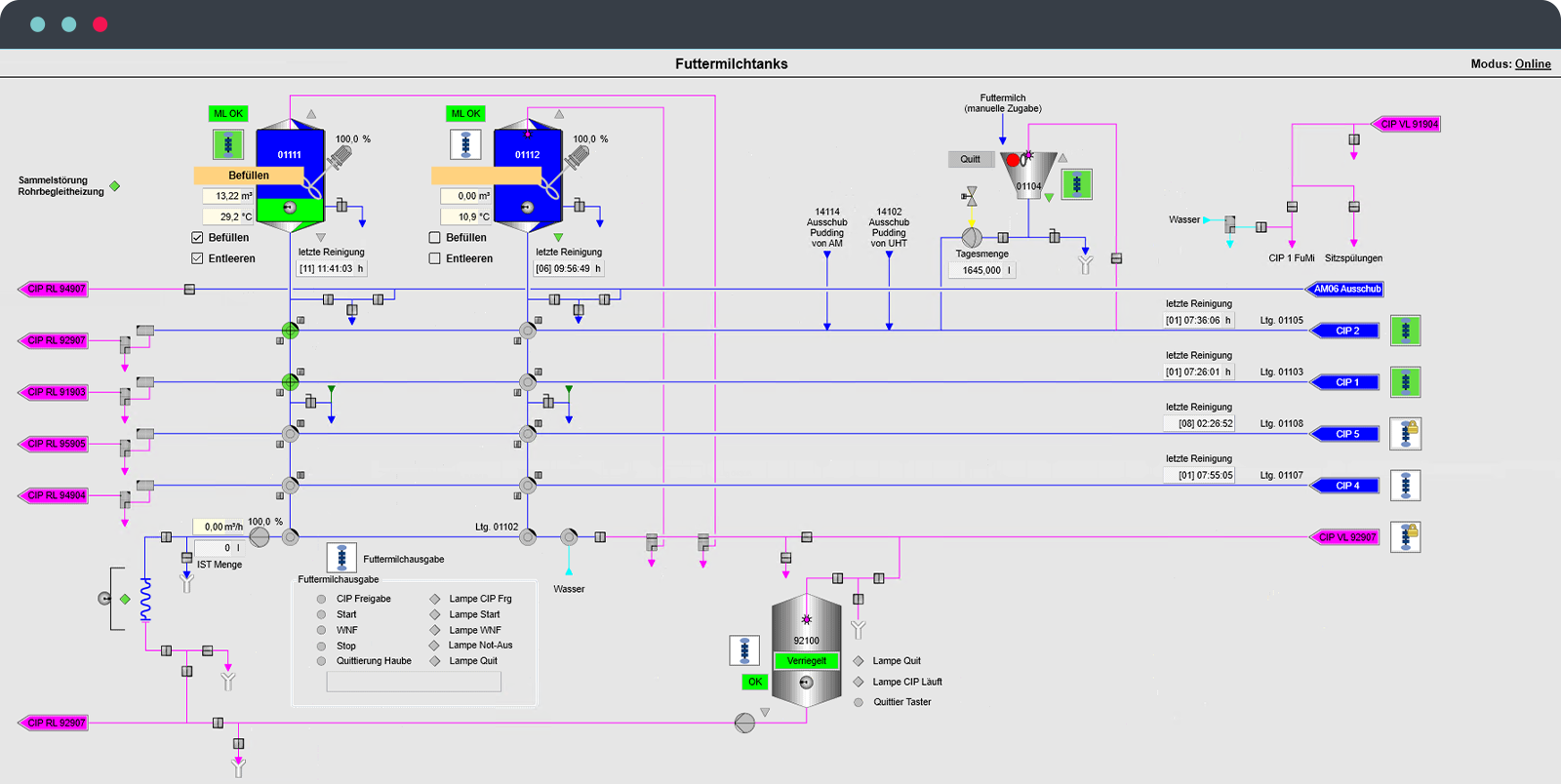
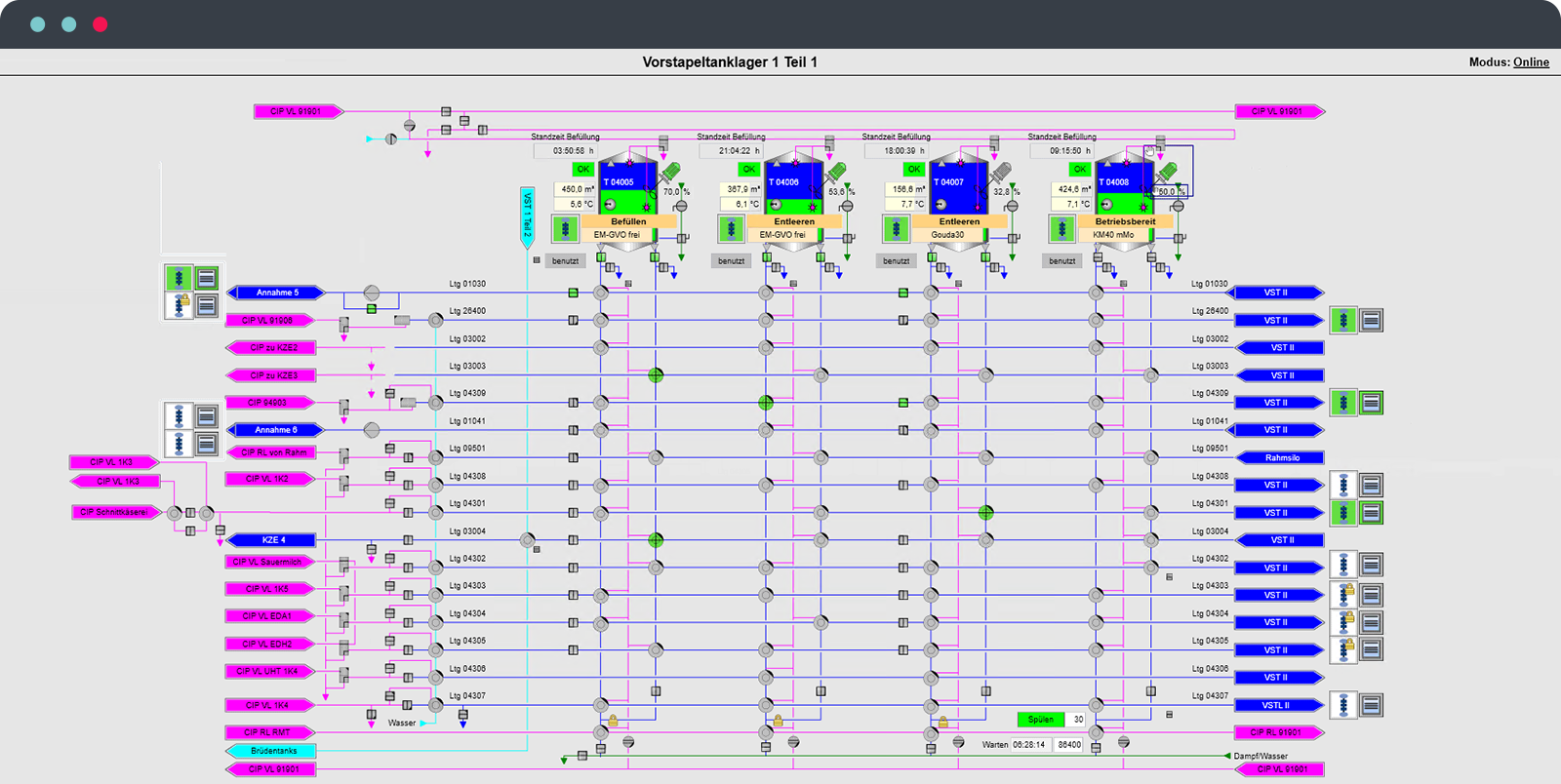
automation excellence
Maximum transparency with maximum availability. Our modernization meets all the requirements that KRITIS companies place on their processes and infrastructure.
20% less interface load
50% more redundancy
100% more user-friendliness
1-second screen refresh rate
”Open-heart surgery a success! Together with our client and partners, we have successfully achieved an important milestone on the path to a smart dairy.
Jens FiebigProkurist und Projektleiter
Our partners
Strong Teamwork for a Successful Transformation

Conclusion
With the replacement of the old S5 and OSNT systems and the migration to Plant iT V9, the dairy’s core operations were brought up to the latest technological standards. The combination of structured software, modern Profinet infrastructure, and state-of-the-art safety technology reduces risks, simplifies maintenance, and increases efficiency throughout the entire process. At the same time, the new, unified software structure lays the foundation for further steps toward digitalization—from deeper MES integration to future big data applications.


