


Turning old into new — An economical way to get started in vegan soy production!
From a traditional dairy operation to a soy cheese factory—it’s one of the largest innovation projects in the history of our long-standing client. By switching to a vegan soy production line, the company is consistently responding to market demand. A key priority for the dairy’s management in this product launch was to utilize as much of the existing plant equipment as possible in order to keep costs to a minimum.
How do you convert an existing dairy processing facility into a vegan soy cheese factory in just four months? With an automation concept that communicates with both new and old control systems and ensures reliable separation of the allergens soy and milk.
Requirements
The focus of the conversion to a soy cheese plant was on achieving 100 percent separation of the allergens whey and soy through a stable and efficient process. A CIP cleaning system originally used for whey was to be upgraded accordingly to meet the high hygiene standards in a cost-effective manner. In addition, the goal was to utilize as many existing plant components as possible for the new production line.
The particular challenge: many pieces of equipment, such as the old cheese-making machines, were still operating with outdated S5 control systems, which—because they were still functional—were to be integrated into the new vegan cheese factory.
Solution
Existing plant equipment re-automated. A retrofit that makes the transition to a vegan cheese factory easier, faster, and, above all, safer.
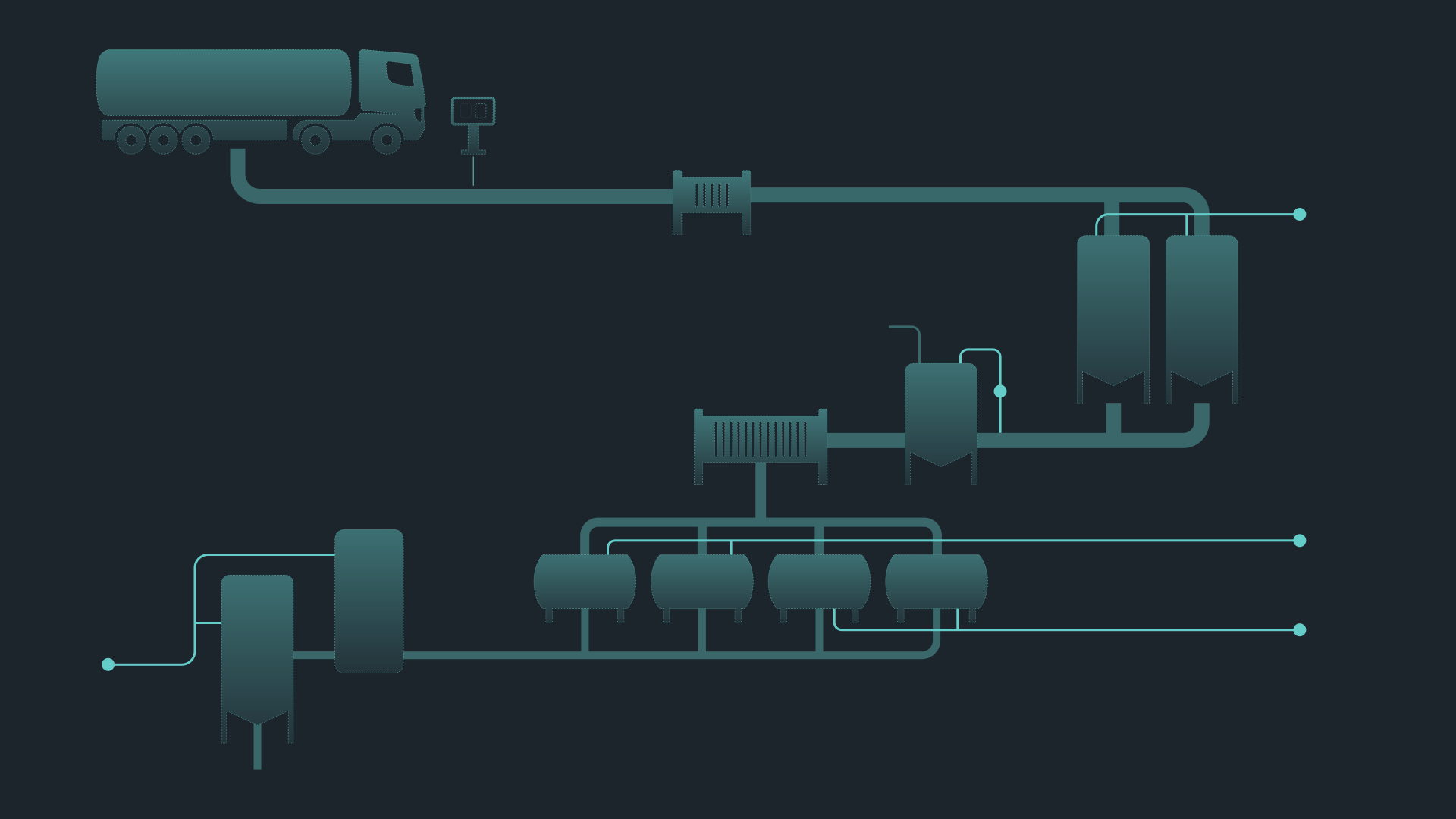
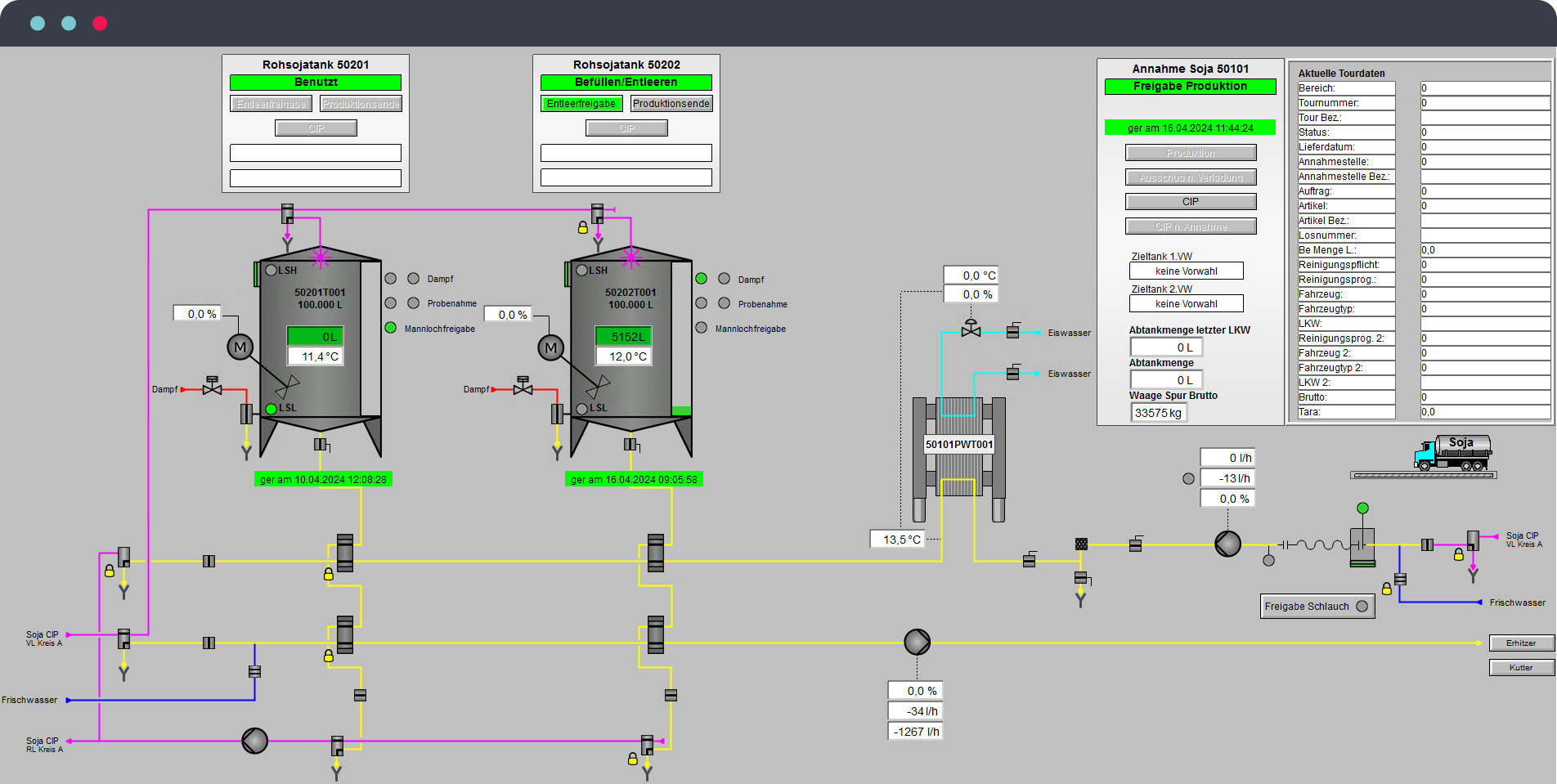
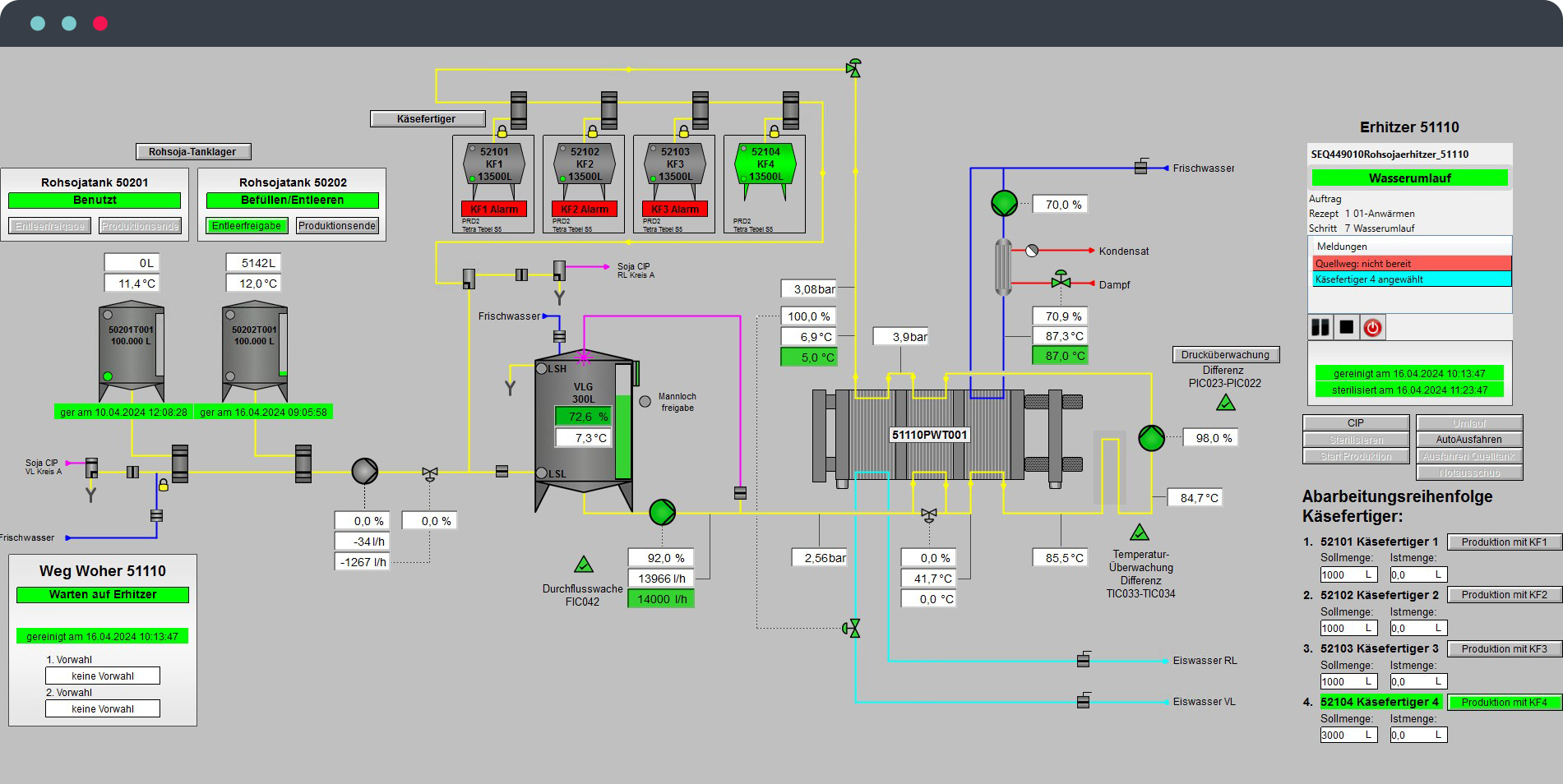
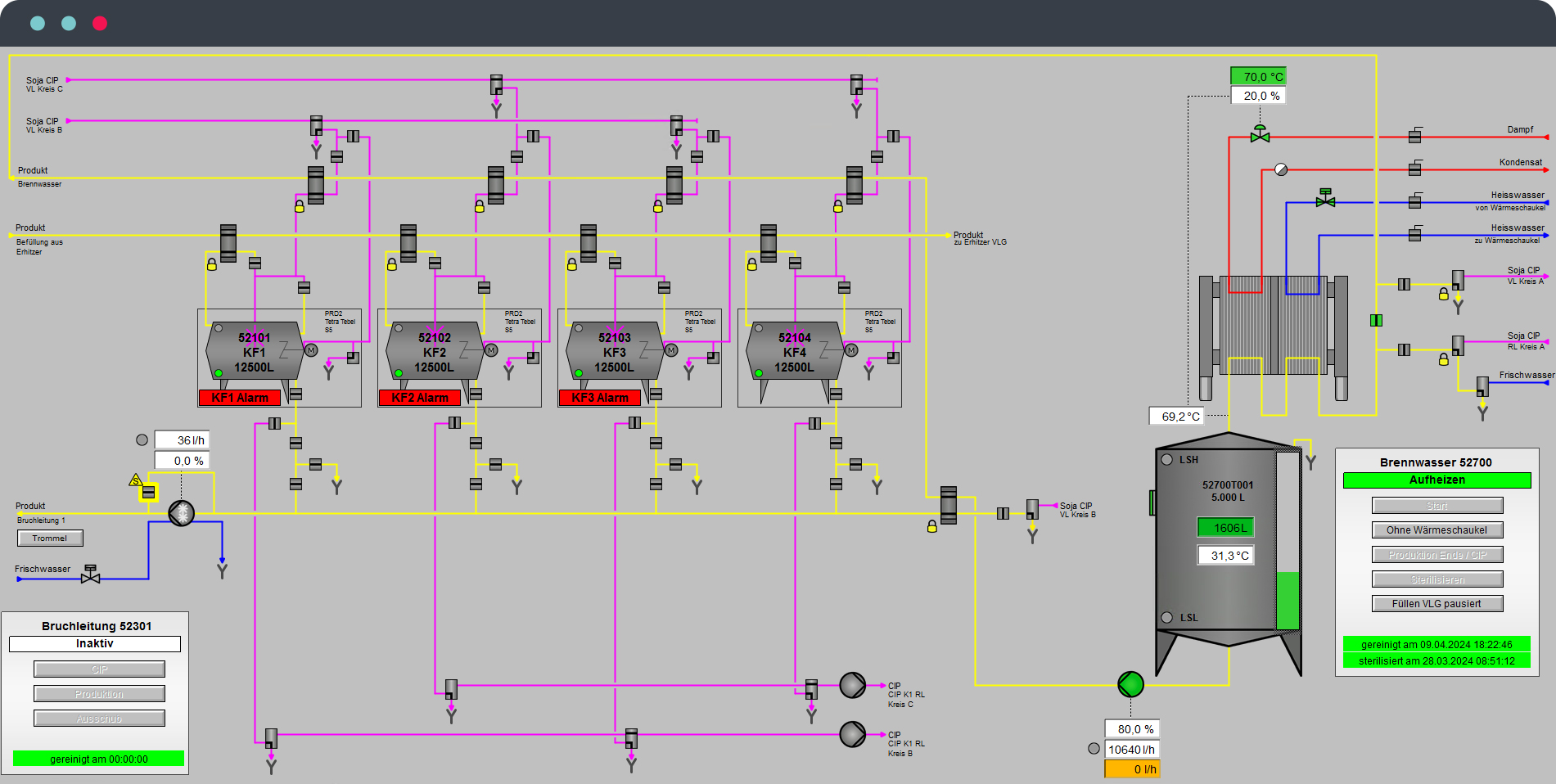
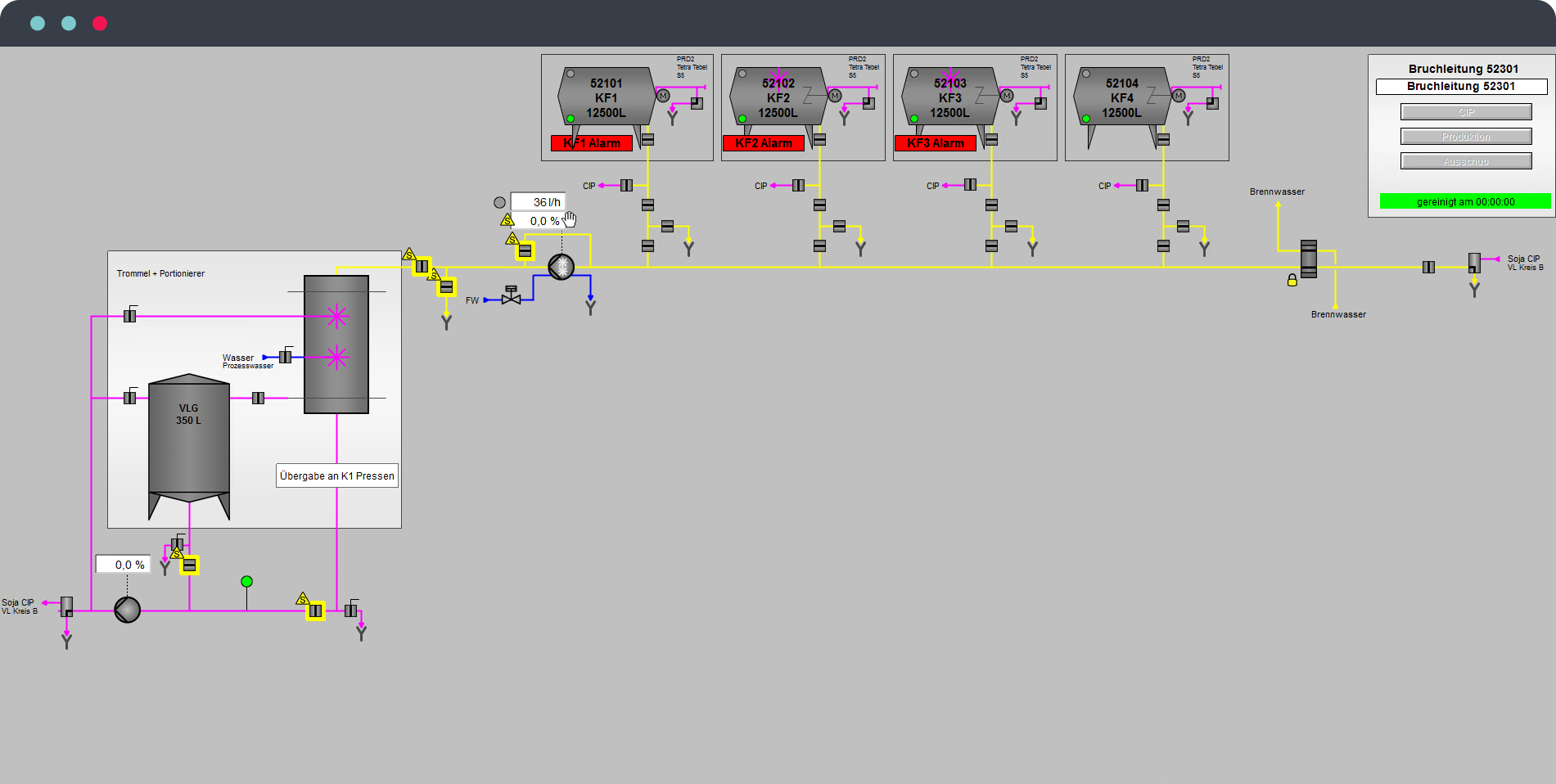
Working closely with the plant manufacturer and the Dairy & Cheese staff, the existing plant portfolio was integrated as much as possible into the new soy cheese plant, and the programs were adapted to the soy product. In addition to programming the intake, raw soybean tanks, heaters, the blowdown water system, and the break line, we integrated all objects into the CIP K1 system, including the modification of the interface.
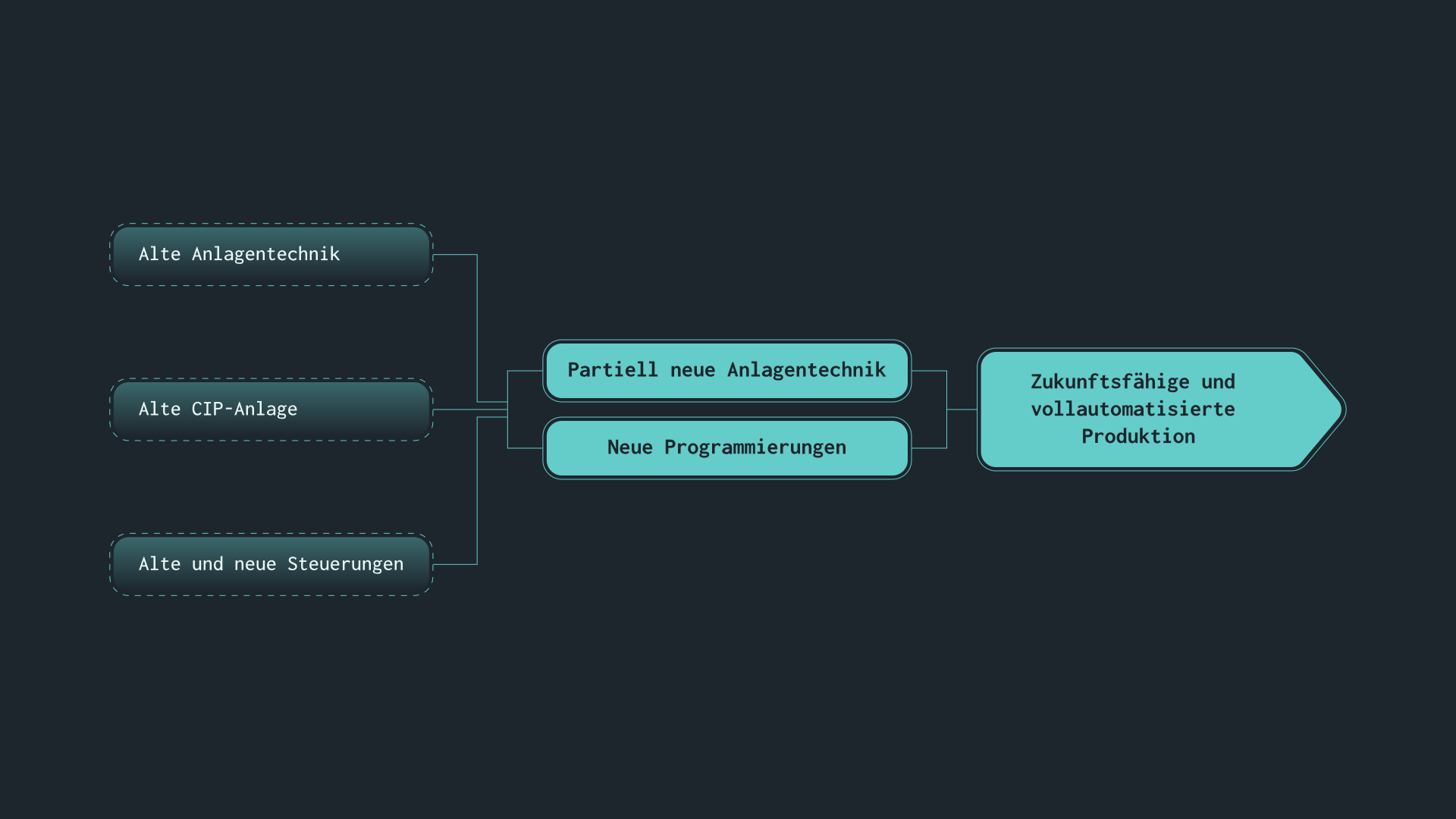
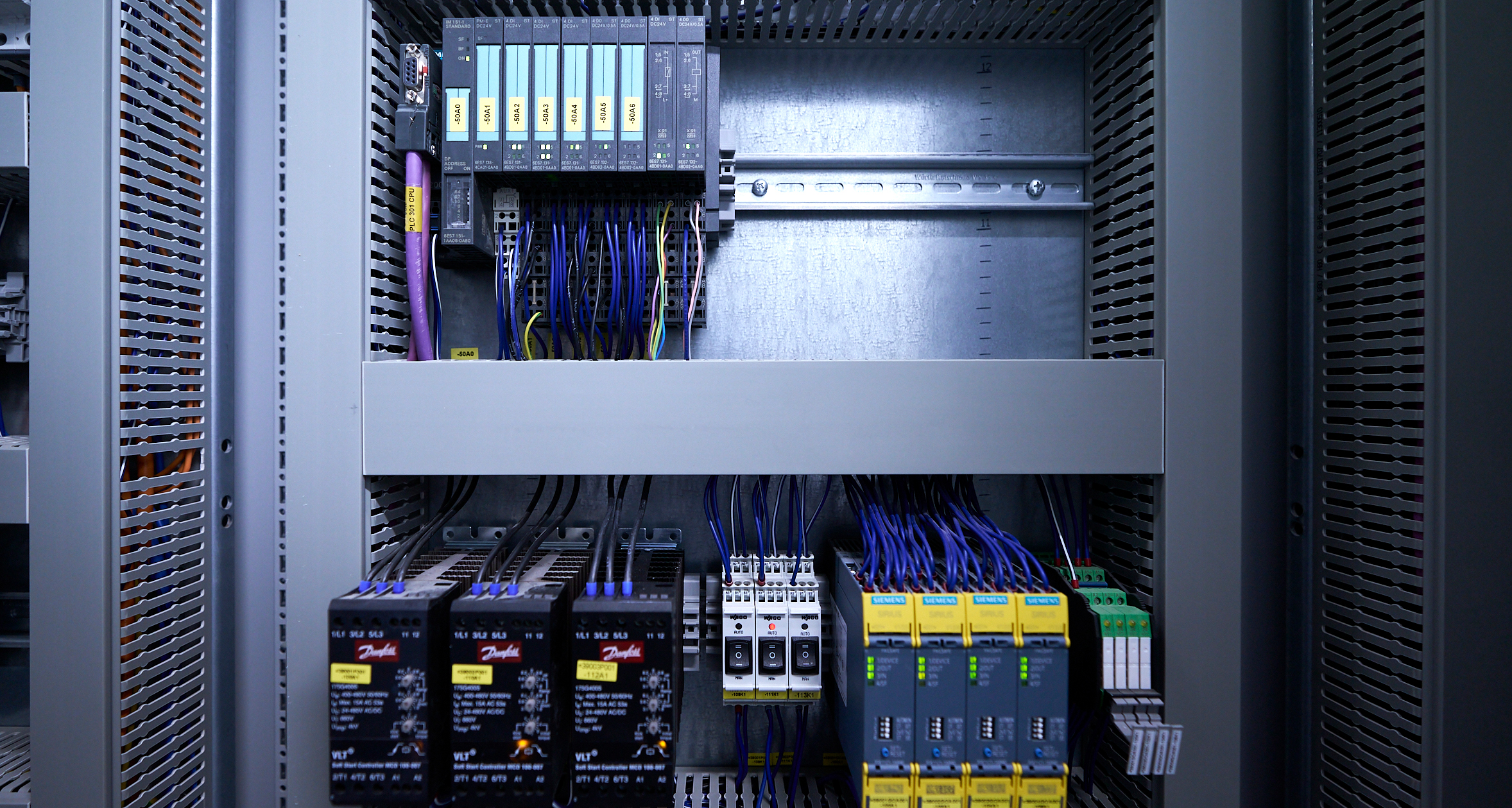
While the four cheese-making machines and presses run on the old S5 controllers, the S7-400 PLCs—which have proven themselves in the process industry—are used in all other applications. All controllers and the WinCC 7.5 process visualization system are integrated into the existing servers and systems.
”By refurbishing and reprogramming existing systems in accordance with current process and quality management standards, we are able to help our customers enter a new product segment more easily and cost-effectively.
Thomas BuxGeschäftsführer planemos
Advantages
An efficient, comprehensive solution with clear advantages in terms of ease of use and cost-effectiveness.

Upgrade
Upgrading and integrating old, decommissioned existing systems into processes through new programs.

Very little training
Machine operators have experience with the old equipment, so no new training is required.

Cost-effective market launch
No major new investments in plant technology, making this an extremely efficient step toward a groundbreaking expansion of the dairy portfolio.

100% Quality control
Reliable traceability and separation of allergens in an automated process.
quality assurance
Maximum security during goods receipt
Thanks to our programming, the truck driver is guided through the filling process via a ticketing system. In addition to the standard parameters, numerous inspection sequences are used here to ensure the quality of the raw material. During this process, data from a database regarding the current order is exported via the scanner and fed into the PLC/visualization system.

Sustainability
Energy-efficient temperature control
The heater is the most complex component in the entire system and the most difficult to program, since many parameters must be checked and adjusted simultaneously within a narrow time window. Control valves in the heater ensure precise adjustment of the desired setpoint temperature via a plate heat exchanger. In this process, the product is heated only to the extent necessary and as defined in advance.
Specialized expertise
Old S5 controllers? We can handle that.
Especially when it comes to integrating old S5 controllers into a modern process, a great deal of expertise and experience is required to correctly read and reprogram all parameters. The clear advantage: they work. That’s why it can make perfect sense to prioritize integrating the old signals and standards into new, modern control systems, thereby saving on unnecessary costs and avoiding downtime.
automation excellence
Experience pays off—threefold!
High speed
Up and running in just 4 months, including all tests and trial runs, with absolutely no downtime.
Quality
Throughout the entire process chain, all sensitive data—such as flow rates, process temperatures, and pressure readings—are automatically recorded, regulated, and documented.
Efficiency
Thanks to our experience, we were able to repurpose an old facility with outdated control systems for the new soybean production, thereby significantly reducing the need for new investments.


