


Scalable MES solutions for greater transparency and efficiency in the food and beverage industry.
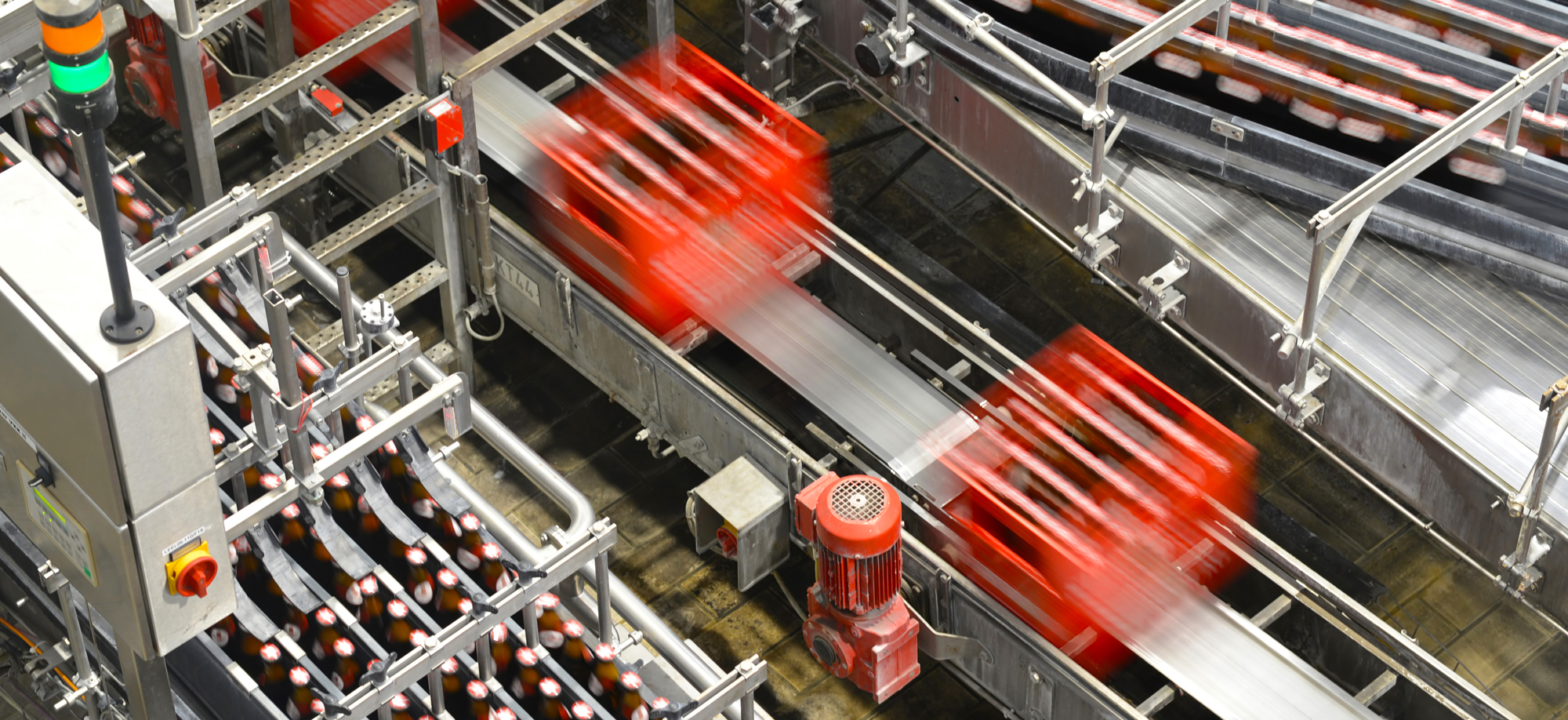
A well-tailored MES production control system is no longer optional even for small and medium-sized beverage and food manufacturers; rather, it is more essential than ever. One reason for this is the increasing competitive and cost pressures that are presenting businesses—regardless of their size—with ever more complex challenges. What is needed are efficient and therefore cost-effective solutions that capture all value-chain data seamlessly and in real time, and make it available for optimizing products and processes.
game-changer
What is an MES system?
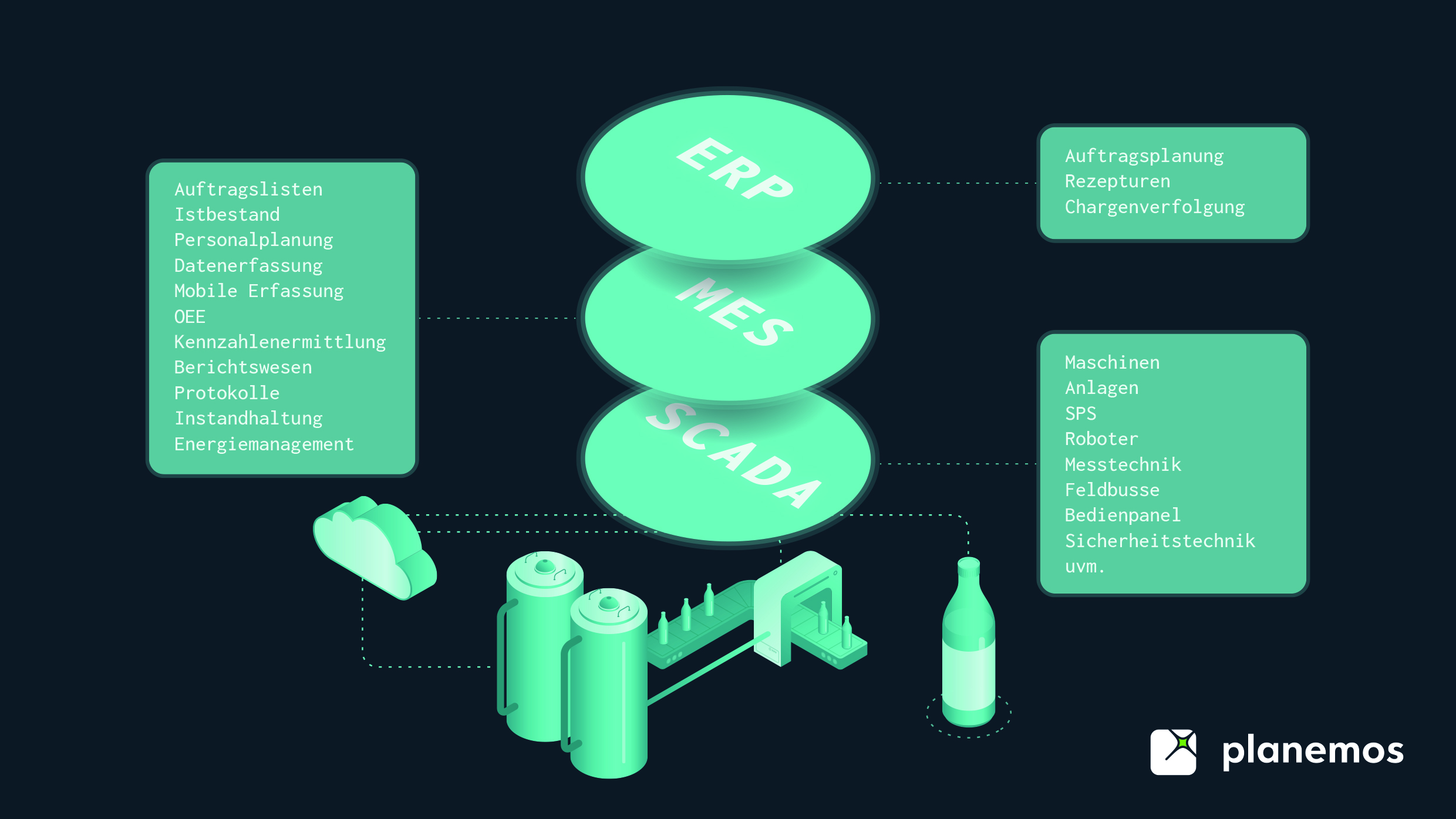
A MES (Manufacturing Execution System) is a comprehensive, dynamic software system that monitors, tracks, records, and controls the manufacturing process all the way through to the finished product. The MES serves as a functional layer between ERP (Enterprise Resource Planning) and process control. This provides decision-makers with a wealth of relevant data and information to make production more efficient. At the same time, different manufacturing operations always place different demands on the MES system. These demands are key to the alignment and design of this invaluable interface.
advantages
Real-time data is the key to cleaner, more efficient, and more cost-effective production.
By implementing MES systems, manufacturers gain a powerful tool that enables them to optimize planning, output, and quality, as well as reduce waste and improve production efficiency. Particularly in terms of traceability, documentation, and production efficiency, the implementation of an MES system offers significant cost-saving opportunities that can pay for the initial investment within just a few years.
Optimized planning
MES systems generate realistic plans for the shop floor by precisely coordinating available labor, material, and equipment capacities. This process takes due dates and maintenance schedules into account to optimize product flow and equipment utilization and increase overall output.
Higher product quality
All relevant quality information is recorded in real time, potential problems are identified through deviation management, and opportunities for optimization are highlighted. At the same time, quality standards are maintained throughout the entire production and development process. Through faster response times and targeted design, it is possible to reduce waste and scrap while simultaneously optimizing product quality.
Significant cost savings
Manufacturing Execution Systems monitor and enforce production processes to ensure quality and efficiency—at every level. This makes it possible to increase overall productivity and profitability through data-driven optimization of the shop floor. By eliminating personnel costs and achieving significant savings in process resources, MES systems make a major contribution to a sustainable and profitable transformation.
More stable and faster processes
The digitization and automation of processes reduce the error rate in the value chain. At the same time, workflows and documentation are streamlined. The data collected from the shop floor is available to all decision-making levels, significantly increasing transparency in the process. In the case of a product launch, complex setups, formula management, and quality standards run almost entirely automatically—and thus even faster.
Greater transparency
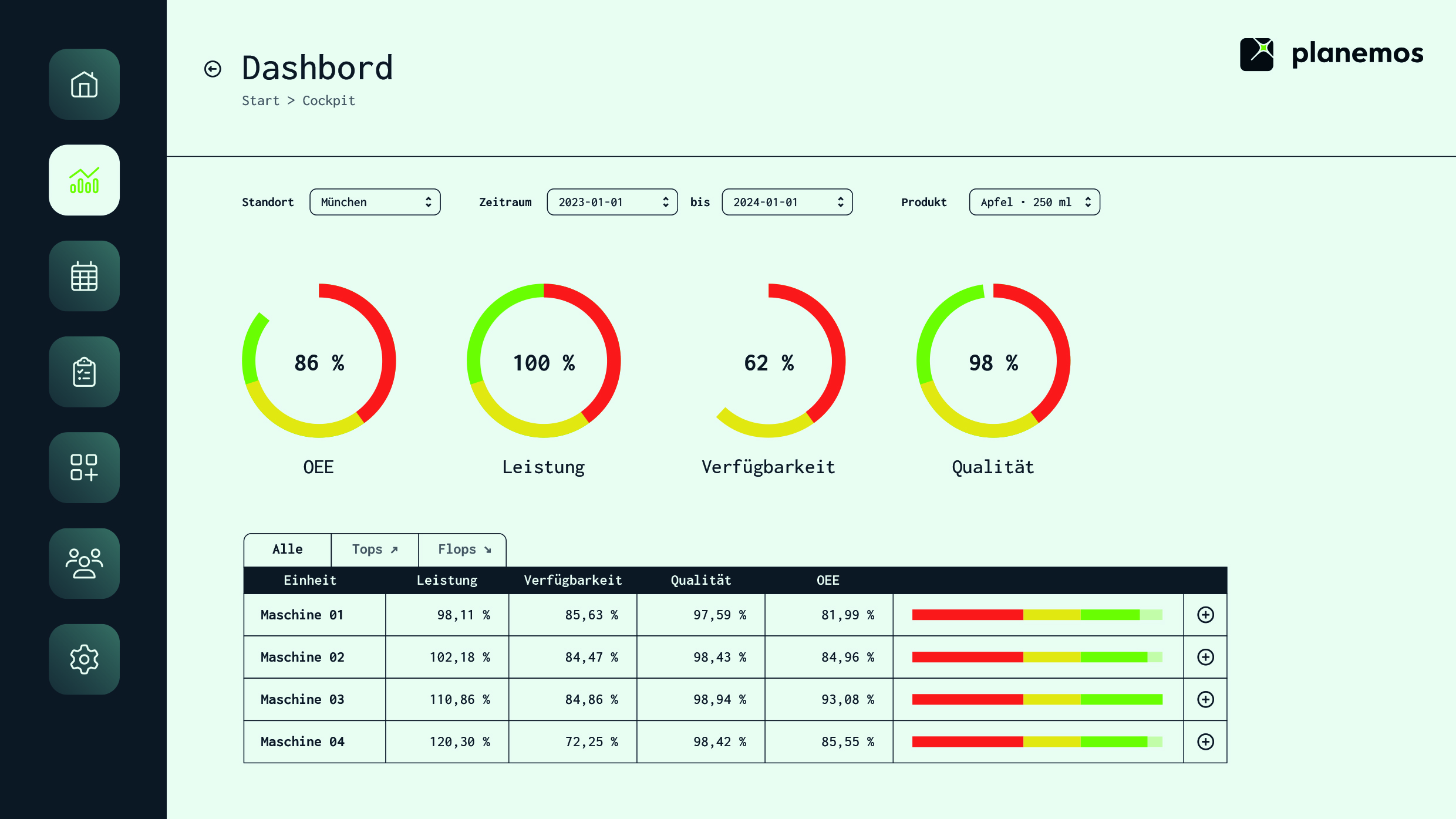
Preconfigured performance analyses and real-time monitoring provide employees with optimal insight into process data and alert them to potential deviations or downtime. By updating inventory levels in real time—such as production volumes, waste, or the inclusion of defective raw materials—the system provides a valuable basis for decision-making. Accordingly, individual departments receive valuable information about which resources and products are actually in stock. Thanks to this realistic planning, significant cost savings are achieved—for example, in manufacturing, logistics, or warehousing—and orders are allocated according to available capacity.
Comprehensive documentation and traceability features
All data from the production floor and the ERP system is collected, reconciled, and documented as part of an ongoing process and can be viewed by users in preconfigured reports. Given the stringent requirements placed on manufacturers in the beverage industry, employees benefit from this automation in virtually every area of the process chain. The result is compliant and reproducible products that are manufactured with a minimum of inspection and administrative effort.
The ERP system operates on a completely different basis than production. At the same time, these two levels must communicate with each other. To develop an effective MES solution, one must understand both sides and, in a sense, act as an interpreter who brings them together.
Capacity utilization? Quality issues or high levels of waste? Let’s take a bird’s-eye view of your production. It’s worth it!
up to a 26% increase in efficiency
Take advantage of detailed planning that optimizes capacity utilization, setup times, and process and product quality throughout the entire manufacturing process. And best of all: it’s all fully automated.
100% Traceability
An MES provides you with optimal insight into your production. From real-time monitoring of all production processes and comprehensive documentation to the rapid retrieval of inspection data for audits.
”For an MES to fully leverage its strengths, process data must not only be stored but also actively utilized.
Thomas BuxCEO of planemos
An overview of the most important features
- Automated Data Collection and Digitization of Production
- Management of all production, inventory, quality, and maintenance processes
- Inventory management with real-time tracking and complete documentation
- Resource allocation and detailed planning
- Production data flow
- Employee management
- Performance analysis
- Employee guide
Who can benefit from an MES system?
The simple answer: for any beverage manufacturer looking to improve the efficiency, transparency, and cost-effectiveness of its production.
Of course, MES systems are quite costly, but they can also be scaled to meet specific needs. It’s worth engaging a software company that can first define the customer’s priorities in an unbiased and independent manner and then select—or even develop in-house—the best possible MES product. The data-driven process is thus specifically improved where the customer’s needs are greatest. This allows for the elimination of oversized—and therefore costly—systems right from the start.
When Is an MES Worth It?
When properly designed, MES systems pay for themselves in just a few years.
”When selecting an MES system, you should approach the process as flexibly as possible. What are the most important issues for the customer, where are the efficiency bottlenecks in production, and what do I want to achieve with the MES in the future? Only then can you find a solution that truly makes sense and is effective.
Thomas BuxCEO of planemos
There is no such thing as an off-the-shelf MES.
No system can be effectively implemented without process expertise and customizations. “In the Food Industry in particular, every manufacturing process is highly specific and subject to numerous regulations. For an MES to truly work here, it must be holistically designed around your specific drivers of improvement. Even if many competitors tell you otherwise. It simply won’t work without industry knowledge and customer-specific customizations. Well-known manufacturers of MES systems know the numbers; we come from the ground up and know the process.”
We develop tailor-made solutions backed by industry expertise that’s unmatched in the market.
MES Solutions
We integrate proven MES software and customize it to meet your needs.
Entirely in-house development
We develop a customized, comprehensive solution tailored specifically to your situation.
Existing systems
We ensure that your existing ERP and MES systems “communicate” with production and understand it.
Depending on the requirements profile, there are various ways to design an MES solution to best meet your needs. Generally speaking, there are three approaches here: implementing and customizing proven MES software, such as Siemens’ Opcenter Execution; developing a tailor-made manufacturing execution system in-house; or optimizing an already installed system.
The most important requirement
Be open to change.
Above all, a MES requires a willingness to change and question established routines and processes as needed, while also implementing changes in the organization and its workflows. The good news: Thanks to custom-designed software systems, you can make this crucial step toward the smart factory not only cost-effective but also motivating and productive for all employees.


